
Garage Floor Epoxy vs. Polyurea: Why We Don't Use Epoxy
Most people searching for garage floor epoxy want the same thing: a tough, good-looking floor that shrugs off salt and hot tires. We get you there with a polyurea base coat, full polymer flake and a polyaspartic topcoat instead. Here's the honest comparison.
The short answer
We don't install epoxy, on garages, basements or anything else. Epoxy is easy to work with, which is exactly why it shows up in hardware-store kits and on a lot of quick jobs. The system we use is harder to install and much less forgiving, and it holds up better on a Michigan garage floor.
| Typical epoxy floor | Our polyurea and polyaspartic system | |
|---|---|---|
| Working time | Long. It self-levels and gives the installer time to fix mistakes. | 15 to 18 minutes once mixed. It doesn't self-level, so it has to go down right the first time. |
| Sunlight | Can yellow and fade near an open garage door. | The polyaspartic topcoat is UV-stable, so it won't yellow. It works outside on patios and pool decks too. |
| Flex and impact | Hard and brittle, so it can chip or crack. | More flexible, so it resists chipping, cracking and peeling. |
| Install day | Often several days of cure between coats. | One day for a typical garage. Light use within 24 hours. |
| DIY friendly? | Yes, which is part of the problem. | No. It takes the right equipment and practice with this exact product. |
Why the 15 minutes matters
Epoxy gives an installer time. It levels itself and it stays workable long enough to fix a mistake. Polyurea and polyaspartic don't. Once they're mixed, the clock is running, and the product has to set properly on the floor, not in the bucket. That's where our slogan comes from: from 15 minutes to forever. Get those 15 minutes right and the floor lasts. Get them wrong and no warranty paper fixes it.
It's also why the installer matters more than the product label. We've worked with this product since it came out around 2018, and we train every installer ourselves on our own floors.
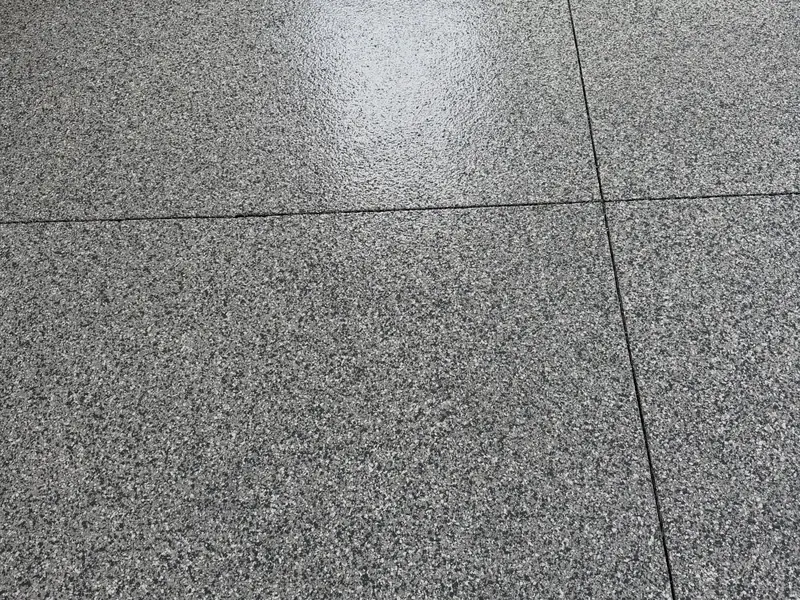
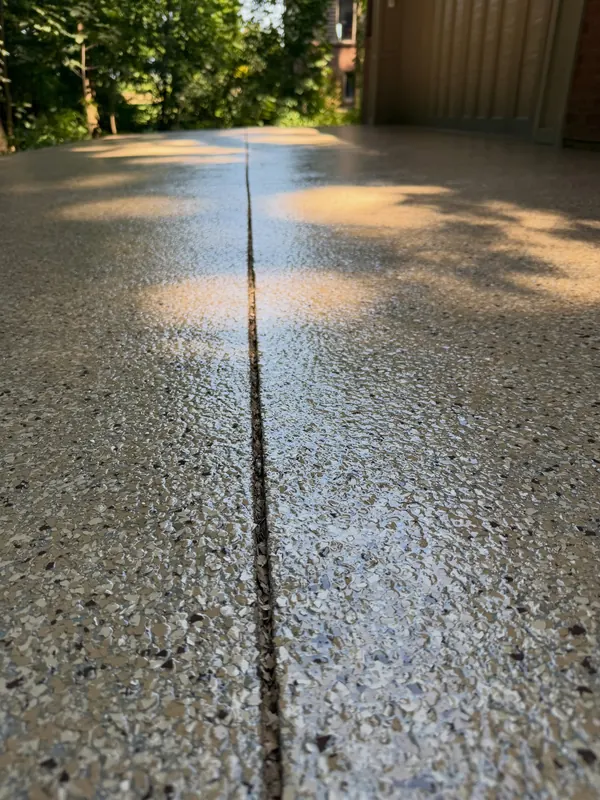
What goes on your floor instead
- Diamond grind. The whole slab gets ground so the base coat can bond into the concrete, not sit on top of it.
- Repairs. Cracks, pitting and joints get filled with polygrout. Even hairline cracks get cut out and stitched.
- Polyurea base coat. This is the layer that grips the concrete.
- Full polymer flake broadcast. Color, texture, wear protection and grip when the floor is wet.
- Polyaspartic topcoat. The clear, UV-stable wear layer that takes the salt, oil and tires.
That's the same system on every garage floor we coat, and it carries our limited lifetime residential warranty.
Already have an epoxy floor that's peeling? We grind failing epoxy and garage paint back to sound concrete before we coat. See how we redo a failed floor.
When someone tells you "it's basically epoxy"
It isn't, and the difference shows up years later. If a quote just says "floor coating," ask what the base coat and topcoat actually are, who makes them, and how long the installer has used them. We use Simiron products from the top distributor in the Midwest and we'll write the system right on your quote.
Want to see what a polyurea floor looks like in your space first? Try our flake colors on a photo of your garage.
Ask us about your floor before you buy a kit
- Send the form. We answer within 24 hours on weekdays. Weekend requests may wait until Monday.
- Want a digital estimate? Text us one wide photo of the floor, a rough square footage, and 3 or 4 close-ups of any cracks or pitting. Text photos to (517) 332-1322 or email them.
- Call (517) 332-1322
- Hours Mon to Fri 7 AM to 7 PM, Sat and Sun 10 AM to 3 PM